Most travelers expect the drive from Antigua to Lake Atitlán to be the easy part of a Guatemala road trip. At roughly 90 km on a paved highway, it looks like a quick transfer between two postcards. What the map does not show is the steep switchback descent into Panajachel, the afternoon wind that makes lake crossings rough after midday, or the parking reality in a town where the car quickly becomes less useful than a boat.
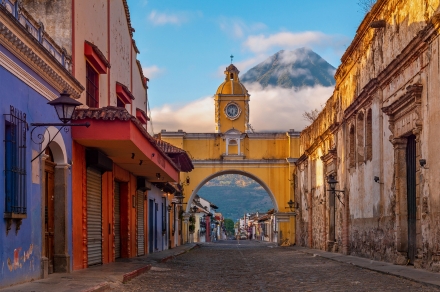
For anyone planning more than just this one leg, Antigua is the better pickup point over Guatemala City: you skip the capital's traffic entirely and start the highland circuit from a town that is already worth a night or two. Enterprise Guatemala makes that easy with an office at 1ra Avenida Norte No. 9B, open Monday through Friday 9:00 AM to 5:00 PM and Saturday 9:00 AM to 1:00 PM. The office is closed Sundays, so if you are planning a Sunday morning departure, arrange your pickup the day before.
What Most Travelers Get Wrong
The drive gets underestimated in a few specific ways, and they tend to compound.
The time. Ninety kilometers sounds like 90 minutes. The reality is closer to 2 to 2.5 hours, and travelers who budget tightly and arrive in early afternoon often find themselves rushing straight to the dock just as the Xocomil wind begins to pick up.
The car. A rental vehicle is valuable for getting to Atitlán and continuing onward. At the lake itself it becomes a liability—most villages are boat-only and the eastern shore roads deteriorate badly in the rainy season. Think through whether you actually need the car at the lake before committing to keeping it.
The itinerary math. With lanchas stopping between 5:00 and 6:00 PM and the Xocomil making afternoon crossings rough, the usable window for village-hopping is shorter than most people plan for. Arriving by late morning rather than mid-afternoon changes the entire day.
The Road from Antigua
The drive follows CA-1 (the Inter-American Highway) northwest from Antigua through Chimaltenango and Tecpán to the Los Encuentros junction, where you turn south toward Sololá. From Sololá, the road descends into the valley and drops into Panajachel on the lake's north shore.
- Los Encuentros is a busy market junction with trucks, camionetas, and tuk-tuks crossing continuously. Reduce speed well before the turn and follow signs toward Sololá rather than continuing on CA-1 toward Quetzaltenango. It is well-marked but easy to blow past at speed.
- The alternate route via Godínez is longer and passes through stretches not recommended for rental vehicles. Stick to CA-1 through Los Encuentros and down through Sololá.
- GPS works reliably on this route. Download offline maps before leaving Antigua in case signal drops on the descent into Panajachel.
The Sololá Descent
The 8 km road from Sololá down to Panajachel is the section that catches first-time drivers off guard. It is steep, with tight curves, limited overtaking opportunities, and buses and trucks sharing the lane. At the bottom, the road feeds directly into Panajachel's narrow main streets with little transition, so keep your speed down through the final stretch.
The road is paved and well-traveled. Anyone comfortable with mountain driving will manage it without issue. Use low gear, keep extra distance behind large vehicles, and do not rush. Fog settles on this stretch regularly in the early morning and late afternoon. If visibility drops significantly, pull over at a wide shoulder and wait it out.
What Vehicle Do You Need?
A sedan handles the Antigua-to-Panajachel route comfortably year-round. CA-1 is well-maintained and the Sololá descent, while steep, is fully paved.
Where the decision shifts is your plan beyond Panajachel. The eastern shore villages of Santa Catarina Palopó, San Antonio Palopó, and San Lucas Tolimán are reachable by road, and those secondary roads deteriorate significantly during the rainy season (May through October). If you plan to drive the lake's eastern shore rather than relying entirely on lanchas, an SUV gives you better margin on rough or damaged stretches.
For a trip that sticks to Panajachel as a base with boat transport to other villages, a compact car is sufficient and considerably easier to park. Reserve your vehicle ahead of time on the Enterprise Guatemala website. Availability for specific vehicle classes is not guaranteed at the counter.
Parking in Panajachel
Street parking on Calle Santander, Panajachel's main strip, is scarce. Several private attended lots operate near the central market and around the bus terminal with modest rates payable in cash.
The deeper question for most drivers is whether to leave the car parked for the duration of the stay. Because most lakeside villages are only accessible by lancha rather than road, the vehicle becomes effectively idle once you are on the water. Factor that into your rental decision: if Atitlán is your final stop before flying home or heading back to Guatemala City, dropping the car in Antigua and taking a shuttle to the lake is worth considering. If the lake is a stop in a longer overland itinerary, keeping the car is the obvious move.
Getting Around the Lake by Lancha
Lanchas are the motorized water taxis that connect Panajachel to the villages around the lake. The main dock, Muelle Tzanjuyú, is at the end of Calle del Embarcadero in Panajachel. Public lanchas do not run on a fixed timetable. They depart when full, and during daylight hours the wait at the main dock is rarely more than 15 minutes on the busiest routes.
Boats run from roughly 6:00 AM until 5:00 to 6:00 PM. Missing the last boat is a genuine problem: villages without road access cannot be reached by land once service ends, and there are no alternatives.
The Xocomil Wind
Plan boat travel for the morning. The Xocomil typically kicks up after midday and makes crossings choppy. If you are planning a day trip to Santiago Atitlán or one of the western shore villages, leave the main dock by 9:00 AM and aim to be back before 1:00 PM.
Lancha fares are paid in cash quetzales. Bring small bills to the dock.
What to Do at Lake Atitlán
The lake has twelve villages spread around its shores, each with a different character. Most visitors focus on three or four over a two-day stay.
Panajachel
The transport hub and service center of the lake. Panajachel has the widest range of accommodation, the most reliable ATMs, and direct lancha connections to everywhere else. Calle Santander is the tourist spine, lined with textile markets, restaurants, and tour operators. Worth a morning to explore before heading out by boat.
San Juan La Laguna
One of the quieter villages on the lake, known for cooperatives of Maya artists and traditional textile work using natural plant dyes derived from local plants including avocado seeds and chrysanthemums. Easier to absorb than the busier villages and a good stop on the way to or from San Pedro.
San Pedro La Laguna
The most developed village for independent travelers, with a dense concentration of cafés, language schools, and mid-range accommodation. San Pedro Volcano (3,020 meters) rises directly above the town and is accessible via guided day hike. Confirm current trail access with a local operator before committing, as conditions and permissions change seasonally and access has been restricted at various points.
Santiago Atitlán
The largest indigenous town on the lake and the cultural center of the Tz'utujil Maya. Santiago is best known for Maximón, a syncretic folk saint figure unique to this region, whose shrine moves between local homes throughout the year and is accompanied by offerings of cigars, rum, and textiles. Finding the current location of the shrine is part of the visit; local guides at the dock will point you toward it for a small tip. The market town itself is worth a few hours independent of the shrine. Plan the crossing for the morning given the Xocomil.
When to Leave and What to Watch For
Leave Antigua by 8:00 AM. This gets you through Chimaltenango before traffic builds and puts you at the lake before the Xocomil picks up, leaving the bulk of the day for the water.
Sunday afternoons are the worst window. Weekend day-trippers returning to Guatemala City create significant congestion on CA-1 between Los Encuentros and Chimaltenango. If you are flexible, a Monday through Friday morning departure is the cleanest window.
The rainy season (May through October) brings afternoon downpours that reduce visibility on the Sololá descent and can leave standing water on lower sections of CA-1. A morning departure sidesteps most of it.
Road Safety
The CA-1 corridor between Antigua and Panajachel is one of the most heavily traveled tourist routes in the country. PROVIAL patrols the highway and can be reached at 1520 for roadside emergencies. Keep doors locked and valuables out of sight in slow traffic at Chimaltenango and the Los Encuentros junction.
For tourist emergencies, ASISTUR provides 24/7 bilingual assistance at 1500 from any Guatemalan phone, +502 2290-2810 from abroad. Police: 110. Fire and ambulance: 122 or 123.
Frequently Asked Questions
How long does it take to drive from Antigua to Lake Atitlán?
Plan for 2 to 2.5 hours to Panajachel under normal conditions. The distance is about 90 km but the Sololá descent is slow by design and the Los Encuentros junction adds time when it is busy. Sunday afternoons are the worst window for congestion on this route; Monday through Friday mornings are the most reliable.
Can you drive all the way around Lake Atitlán?
No. There is no continuous road circling the lake. The steep volcanic terrain means most villages are accessible only by lancha from Panajachel's main dock. Santa Catarina Palopó, San Antonio Palopó, and San Lucas Tolimán on the eastern shore are reachable by road. San Pedro, San Juan, San Marcos, Santiago Atitlán, and the majority of smaller villages require a boat.
Is there an Enterprise Guatemala office at Lake Atitlán?
There is no Enterprise office in Panajachel or elsewhere at the lake. The closest offices are in Antigua and Guatemala City. One-way returns between offices are available with advance booking and a surcharge. Contact the Enterprise Guatemala team to confirm details before your trip.
What should I know about the lanchas before arriving?
There is no printed schedule. Boats leave when full from Panajachel's main dock, with wait times typically under 15 minutes during the day. Fares are cash only in quetzales. Do not miss the last boat: towns without road access have no land-based alternative once service ends.
Are there tolls on the Antigua to Panajachel route?
There are no toll booths on CA-1 between Antigua and Panajachel. Guatemala's toll roads are concentrated on the CA-9 Atlantic Highway heading northeast from the capital. If your trip continues beyond the lake toward Quetzaltenango or Huehuetenango, you will remain on toll-free roads. Carry cash regardless for fuel, parking in Panajachel, and lancha fares.
What is the best village to stay in at Lake Atitlán?
It depends on what you are looking for. Panajachel is the most practical base: it has the best transport connections, the widest range of accommodation, and is the easiest for early morning departures. San Pedro suits travelers who want to stay longer, take Spanish classes, or hike the volcano. San Juan is the quietest of the main villages and well suited to a short stay focused on the artisan cooperatives. Santiago Atitlán rewards an overnight stay if you want to experience the town beyond a day trip, particularly for the market and Maximón visits.