Guatemala does not have a single best time to visit. It has two seasons, multiple climate zones, and a calendar of cultural events that make almost every month worth considering for the right kind of traveler. What changes month to month is the weather, the road conditions, the crowds, and which destinations are at their most accessible.
This guide breaks it down by month so you can match your trip to your priorities, whether that is hiking volcanoes in clear skies, attending Semana Santa in Antigua, watching giant kites fly over highland cemeteries, or simply paying less and sharing fewer roads with other tourists.
If you are planning a self-drive itinerary, Enterprise Guatemala has offices at La Aurora International Airport and across the country, making it easy to pick up a vehicle the moment you land.
Understanding Guatemala's Two Seasons
Before the month-by-month breakdown, one framing point: Guatemala's climate is shaped by altitude as much as by season.
The highlands (Antigua, Lake Atitlán, Quetzaltenango, Chichicastenango) sit between 1,500 and 2,500 meters and maintain a springlike temperature year-round, typically between 18°C and 26°C (64°F to 79°F). Nights get genuinely cold at higher elevations, particularly from December through February. The Pacific and Atlantic lowlands are hotter and more humid year-round. Petén, where Tikal is located, has temperatures regularly exceeding 30°C (86°F) and a more pronounced wet and dry cycle than the highlands.
Dry season (verano): November through April. Clear skies, cooler nights in the highlands, reliable road conditions on the main routes. Peak tourist season, with accommodation filling well in advance around Semana Santa and the Christmas-New Year window.
Rainy season (invierno): May through October. The pattern is not all-day rain but afternoon showers, often heavy, that typically clear by evening. Mornings are generally clear. The landscape turns intensely green. Crowds thin out and prices soften. The Government of Canada's travel advisory for Guatemala notes that driving conditions can become hazardous during the rainy season due to flooding, mudslides, and rockslides, particularly on mountain routes.
Month-by-Month Breakdown
January
January is peak dry season at its most settled. Skies are clear across the highlands, the air is cool and clean, and the roads are in their best condition of the year. It is arguably the finest month for volcano hiking: Acatenango offers clear summit views of Fuego erupting against a dark sky, something that cloud cover makes unreliable in the wetter months.
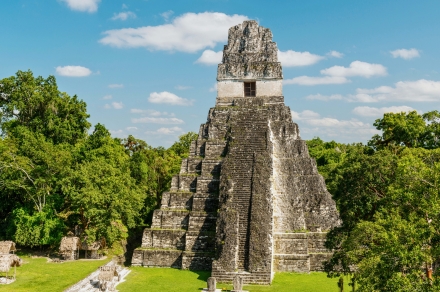
Tikal is also at its most comfortable in January. The Petén jungle is still warm and humid by any standard, but the absence of rainy-season heat makes long walks between temple complexes manageable rather than punishing.
The trade-off is demand. The Christmas and New Year surge carries into early January, and Antigua in particular is busy and expensive. Book accommodation well ahead if traveling in the first two weeks.
Best for: Volcano hikes, Tikal, clear highland road trips.
February
February is the dry season without the holiday premium. Conditions are nearly identical to January but the crowds have thinned and accommodation is easier to find in Antigua and around the lake.
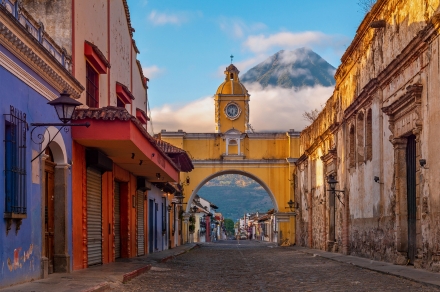
For a self-drive itinerary that takes in Antigua, Atitlán, Chichicastenango, and Quetzaltenango, February is close to ideal. The highland roads are dry, the light is sharp, and you are not competing with school holidays or festival crowds for parking or guesthouse rooms. Temperatures in the highlands sit comfortably in the low-to-mid 20s during the day, with cool evenings that make the colonial cities genuinely pleasant to walk at night.
Best for: Road trips, the full highland circuit, travelers who want dry-season conditions without peak pricing.
March and April
Semana Santa dominates this window and for good reason. In 2026, Holy Week ran from March 29 to April 5, with Good Friday on April 3 marking the peak. Antigua's normal population swells to hundreds of thousands of visitors for the processions: massive wooden floats called andas, weighing up to 3,500 kilograms, carried through the cobblestone streets on the shoulders of purple-robed bearers, past elaborate alfombras (sawdust carpets) that families spend entire nights constructing. It is the largest Holy Week celebration in Latin America and one of the most visually overwhelming experiences in all of Central America.
If Semana Santa is on your list, this is the best time to visit Guatemala, full stop. Book Antigua accommodation months in advance. The procession routes become impassable by vehicle on peak days, so plan to park and walk.
Outside of Holy Week, March and April are warm, dry, and excellent for travel across all regions. The Pacific lowlands get hot in April, with temperatures pushing toward 38°C (100°F) on the coast.
Best for: Semana Santa, highland road trips, Tikal before rainy-season humidity builds.
May
May is the transitional month, and it has a particular character that the peak dry season lacks. The rains have not fully arrived yet, but the landscape is already starting to shift from dry-season brown to green. Afternoons bring scattered showers; mornings are still reliably clear.
Main highway conditions remain good through May. Secondary roads and unpaved routes start to soften, so if your itinerary includes Semuc Champey or mountain village tracks, consider an SUV over a sedan and check conditions locally before departing. Crowds drop noticeably, and the atmosphere in both Antigua and Panajachel relaxes after months of peak-season crowds.
Best for: Budget-conscious travelers, those who want highland conditions without peak crowds.
June, July, and August
These months are the heart of the rainy season, but that does not mean Guatemala shuts down. The pattern across the highlands is predictable enough to work around: mornings clear, clouds building by midday, heavy showers in the afternoon, often clearing again by evening. Plan outdoor activities and long drives for the morning hours and you will lose very little to the weather.
July and August sometimes bring a brief dry break known as the canícula, a short mid-summer lull in the rains that typically lasts two to four weeks, usually in late July into August. Its timing and length vary year to year, but when it arrives it offers a window of genuinely dry conditions in the middle of invierno.
CONRED and PROVIAL both issue regular alerts for landslides and road closures during this period, particularly in Alta Verapaz and on mountain routes in the western highlands. Check both before any long drive. Lake Atitlán and Antigua are at their most lush and green in these months, and Acatenango is still hikeable, though summit visibility is often reduced by cloud cover compared to the dry season.
Best for: Experienced travelers comfortable with afternoon rain, photographers, anyone seeking lower prices and smaller crowds.
September
September is the hardest month to travel in Guatemala, and it is worth being direct about that. Rainfall is at its heaviest, most frequent, and least predictable. The U.S. Embassy in Guatemala has issued specific advisories warning that roads can become extremely unsafe during heavy rains and that mountain routes carry real landslide risk.
If you are in Guatemala in September, stick to paved highways between major cities. Avoid secondary roads. Monitor CONRED daily if you are driving anywhere beyond the main CA-1 corridor. Semuc Champey, Alta Verapaz routes, and highland back roads are best left for another month.
Best for: Flexible travelers who do not mind limited mobility. Not recommended for first-time visitors or anyone with a fixed road trip itinerary.
October
October starts much like September but changes character as the month progresses. By the final week, dry days become more common and the rainy season begins to ease. It is one of Guatemala's most underrated travel windows: the landscape is at peak green, the crowds have not yet arrived for the dry season, and the country is gearing up for November 1.
The Giant Kite Festival in Santiago Sacatepéquez and Sumpango, both within 40 km of Antigua, is on the horizon. Arriving in late October gives you time to explore before the event draws its own crowds.
Best for: Transitional season travel, late-October road trips, positioning for the November 1 Kite Festival.
November
November is arguably the most underrated month on the Guatemalan calendar. The dry season has arrived, the landscape is still green from the rains, prices have not yet climbed to peak levels, and the country opens the month with one of its most extraordinary cultural events.
On November 1, the towns of Santiago Sacatepéquez and Sumpango host the Festival de Barriletes Gigantes. Communities spend months constructing giant kites up to 20 meters across from bamboo and tissue paper, then fly them in and around local cemeteries as offerings to the dead. The kite-making tradition was inscribed on UNESCO's Intangible Cultural Heritage list in 2024. Both towns are accessible from Antigua in roughly 30 minutes by car, making them a natural stop for self-drive travelers.
Road conditions improve quickly through November as surfaces dry out after the rainy season.
Best for: November 1 Kite Festival, early dry-season conditions, value accommodation before December prices rise.
December
December brings the second wave of peak-season tourism. The Christmas and New Year window, particularly December 24 through January 1, fills up accommodation fast in Antigua and around Atitlán. Weather is excellent throughout: clear, dry, and comfortably warm in the highlands with cool evenings.
December 7 marks the Quema del Diablo (Burning of the Devil), a nationwide tradition in which bonfires are lit at dusk to drive away evil spirits. Chichicastenango's Festival of St. Thomas falls in late December with local celebrations around December 21, worth combining with a market visit if the timing aligns.
Best for: Festive atmosphere, dry-season road conditions, travelers who do not mind holiday crowds.
When to Visit for Self-Drive Travelers
For the main highland corridor (Guatemala City, Antigua, Atitlán, Xela, Chichicastenango), November through April offers the most reliable conditions. For Semuc Champey and Alta Verapaz routes, the dry season is strongly preferred. Petén and Tikal are accessible year-round on paved highway but are most comfortable in the dry season when humidity drops and unpaved tracks to secondary sites are drivable.
Whenever you travel, contact the Enterprise Guatemala team for route-specific questions or start your reservation online to book in advance.
Frequently Asked Questions
What is the best time to visit Guatemala?
The dry season from November through April offers the most reliable weather and road conditions. Within that window, February and early March are the sweet spot for most travelers: stable weather, manageable crowds, and Semana Santa approaching for those who want to time their trip around it.
Is it worth visiting Guatemala in the rainy season?
Yes, for the right traveler. Mornings are typically clear, prices are lower, crowds are smaller, and the highland landscape is at its most vivid. The trade-off is afternoon rain, reduced access to secondary roads, and the need to monitor CONRED and PROVIAL for road alerts on mountain routes. September is the exception: it is genuinely difficult to travel and worth avoiding if you have flexibility.
When is Semana Santa in Guatemala?
Semana Santa falls during Holy Week, the week before Easter Sunday. In 2026 it ran from March 29 to April 5. The date changes each year based on the lunar calendar. It is the most attended cultural event in Guatemala, centered in Antigua, and accommodation must be booked well in advance.
What is the Giant Kite Festival in Guatemala?
The Festival de Barriletes Gigantes takes place on November 1 (All Saints Day) in the towns of Santiago Sacatepéquez and Sumpango in the Sacatepéquez department, roughly 30 to 40 km from Antigua. Communities build kites up to 20 meters across from bamboo and tissue paper and fly them in and around local cemeteries as a tradition of communicating with the dead. The kite-making technique was inscribed on UNESCO's Intangible Cultural Heritage list in 2024.
What should I pack for Guatemala depending on the season?
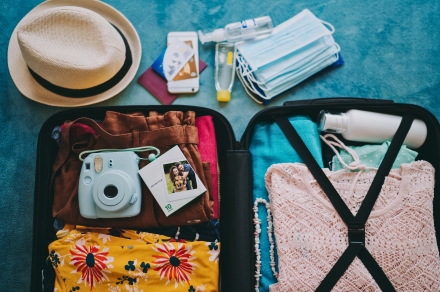
Packing needs shift considerably between seasons and elevations:
- Dry season highlands: Light layers for the day, a warm jacket for evenings and early mornings, especially November through February
- Rainy season: A compact rain jacket or poncho, quick-dry clothing, and waterproof footwear for cobblestone streets that drain slowly
- Petén year-round: Lightweight, breathable clothing, strong DEET-based insect repellent, and a hat
- Volcano hikes: Warm layers regardless of season, as temperatures at summit elevation drop sharply overnight