Ten days is enough time to drive a proper loop through Guatemala's highlands, its jungle interior, and the Petén, if you plan the routing correctly. Most 10-day itineraries are written for shuttle passengers, which means they skip the places that are genuinely difficult without a car and underestimate how long the drives usually take.
The route covered here runs from Guatemala City to Antigua, Lake Atitlán, Quetzaltenango, Cobán, Semuc Champey, Flores, and Tikal before returning south. It's not exactly a relaxed trip. Several of the driving days are long and some of the roads are rough. What it gives you in return is access to a version of Guatemala that shuttle passengers simply cannot reach on the same timeline. Reserve your vehicle with Enterprise Guatemala at La Aurora Airport before you fly.
Before You Leave the Airport
Pick up your vehicle at the Enterprise Guatemala desk on the third floor of the La Aurora Airport parking structure, open daily from 5:00 AM to midnight.
Vehicle choice matters for this itinerary. The highlands and paved highways are sedan-friendly, but the road to Semuc Champey from Lanquín is unpaved and rough. An SUV can easily handle the full route without compromise. A sedan will struggle on that final stretch. Book accordingly.
Avoid leaving the airport between 4:00 and 7:30 PM on weekdays. If your flight lands in the evening rush, eat at the airport and head to Antigua after 7:30.
Days 1 and 2: Antigua
The drive from La Aurora to Antigua takes 45 minutes to an hour. You take Calzada Roosevelt west onto CA-1 and follow signs toward Sacatepéquez. The turnoff for Antigua is well marked.
Give Antigua two nights. One day for the city itself, one for the volcanoes.
Day 1 in the city is compact and walkable. Parque Central, the ruins of the Cathedral of Santiago, the Mercado de Artesanías on 4a Calle Poniente, the yellow facade of La Merced church. None of it takes more than a half day on foot. Use the afternoon for coffee shops, the covered market, or just wandering around.
Day 2, go to the volcanoes. Hire a guide for Volcán Pacaya, an active volcano at about 2,552 meters and one of the most accessible in Central America. The hike takes three to four hours round trip. INGUAT provides guidance on licensed operators. Do not attempt Acatenango on this itinerary unless you are cutting something else, however. The overnight trek is worth doing, but it costs you a full day.
Parking in Antigua is possible but cobblestone streets are narrow. Most hotels in the center offer secured parking, but confirm that when booking.
Day 3: Antigua to Lake Atitlán
Drive time: approximately 2 to 2.5 hours.
Leave early to avoid Antigua's outbound traffic, which builds after 9:00 AM. From Antigua you take CA-1 west through Chimaltenango and descend to Panajachel via the Sololá road. The final stretch into town is steep and winding.
Base yourself in Panajachel. It’s the main vehicle hub on the lake and the only town where parking is practical. Leave the car and get around by lancha, the small motorboats that run between lake villages from the dock on Calle Rancho Grande from around 6:30 AM.
San Juan La Laguna is worth the boat ride for its textiles and murals. San Pedro La Laguna has the energy and the hiking. Santiago Atitlán, on the far shore, has the Maximón shrine, a syncretic figure blending Maya and Catholic tradition that is genuinely hard to explain and worth seeing in person.
Day 4: Lake Atitlán to Quetzaltenango
Drive time: approximately 1.5 hours.
This is thankfully the shortest driving day on the itinerary. Quetzaltenango, called Xela by everyone who lives there, sits at 2,335 meters and is Guatemala's second-largest city. It’s not a tourist town in the way Antigua is. The food scene is genuinely good, and the pace is slower.
Worth your time in Xela:
- The Mercado La Democracia for a proper highland market without the tourist overlay
- The neoclassical Teatro Municipal on the central plaza, one of the more striking buildings in the country
- Fuentes Georginas, hot springs in the mountains about 8 km south, accessible by car in under 30 minutes
Xela is also the launch point for hikes up Volcán Santa María and Volcán Santiaguito, one of the most active volcanoes in the Western Hemisphere. Both require guides and an early start. Factor that into your afternoon if the legs are still good after Antigua.
Day 5: Quetzaltenango to Cobán
Drive time: approximately 5 to 6 hours.
This is the most demanding drive of the itinerary. From Xela you head east on CA-1 before turning north on a route that winds through indigenous market towns and a cloud forest into Alta Verapaz.
Leave by 7:00 AM. Mountain roads in Guatemala slow you down in ways that Google Maps doesn’t account for. Police and military checkpoints are routine on this corridor. Have your passport, driver's license, and rental agreement accessible.
Cobán is a pleasant highland city known for cardamom farming and a cool, misty climate. Spend the night.
Day 6: Cobán to Semuc Champey via Lanquín
Drive time: approximately 3 hours total.
From Cobán, the drive to Lanquín takes about two hours on a paved road. Lanquín is the small town that serves as the base for Semuc Champey. The pools themselves are a further 10 km beyond Lanquín on an unpaved road that requires slow, careful driving.
Semuc Champey is a natural limestone bridge over the Cahabón River, and the turquoise pools that form on top of it are among the more visually improbable things in Central America. The park is open from 6:00 AM to 6:00 PM. A mirador trail above the pools gives you the full panoramic view, a climb of about 45 minutes that is steep and slippery in wet weather. Do the hike first.
Stay the night in Lanquín. There are several guesthouses and small hotels in the area. Going back to Cobán the same day wastes the morning light and means you end up driving the rough road in the dark, which you want to avoid entirely.
Day 7: Lanquín to Flores
Drive time: approximately 6 hours.
This is the longest day behind the wheel. From Lanquín you return to Cobán and then head north, crossing into the lowlands and following the road into the Petén. The route passes through increasingly flat, forested terrain. Fuel up in Cobán before leaving and again in any town where you see a station. Options thin out as you push north.
Aim to reach Flores by mid-afternoon. Flores itself is a small island town on Lake Petén Itzá, connected to the mainland by a causeway, and genuinely charming in the way that few towns near major tourist sites manage to be. Walk the perimeter of the island in the evening. It takes about 20 minutes. Eat by the water.
If the drive is behind schedule due to road conditions or traffic, resist the temptation to push through. The Petén highway after dark is the one road on this itinerary where nighttime driving carries real risk.
Day 8: Tikal
This is not a driving day. Leave the car in Flores and take the 90-minute road north to Tikal National Park.
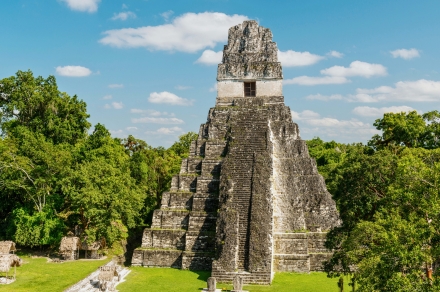
Standard park hours run from 6:00 AM to 6:00 PM. Arrive early. Organized tours from Flores arrive between 10:00 AM and 11:00 AM, and the Gran Plaza becomes congested through midday. The main circuit covers the Gran Plaza, Temple IV, and the Mundo Perdido complex in four to five hours at a reasonable pace. The park has almost no interpretive signage. Authorized guides are available at the visitor center near the entrance and make a significant difference.
If timing allows on the return, Yaxhá is approximately 30 km southeast via a turnoff from CA-13. It sits within the UNESCO-recognized Yaxhá-Nakúm-Naranjo biosphere reserve, has around 500 mapped structures, and its sunset over the lagoon is easily worth the detour.
Day 9: Flores to Guatemala City (or Fly)
Here’s where self-driving gives you a real decision that shuttle passengers don’t have.
Option A: Drive back south. The Guatemala City to Flores road runs 8 to 10 hours via CA-9. Leave before 6:00 AM and you reach the capital by afternoon. The drive back through the Motagua Valley is scenic and a different experience from the route you came north on. Return your vehicle to any Enterprise Guatemala office in Guatemala City.
Option B: Fly from Flores. TAG Airlines and Avianca both fly the Flores to Guatemala City route daily in about an hour. Enterprise Guatemala's office at Mundo Maya Airport is open Monday through Sunday from 7:00 AM to 9:00 PM. Drop the car there, fly south, and arrive in Guatemala City in the early afternoon with the rest of Day 9 intact. One-way rentals require advance booking and carry a surcharge. Contact the team to confirm availability before your trip.
For most travelers on a 10-day timeline, Option B makes more sense. The Flores to Guatemala City drive is essentially the same road you came north on, and spending an entire day retracing it eats Day 9 entirely.
Day 10: Guatemala City
Use this day rather than treating Guatemala City purely as an airport layover. Zona Viva and Zona 10 have the best restaurants. The Museo Popol Vuh on the Universidad Francisco Marroquín campus has one of the finest collections of pre-Columbian Maya artifacts in the country. The Mercado de Artesanías in Zona 13, near La Aurora, is worth a morning if you have shopping left to do.
La Aurora Airport is in Zona 13. The Enterprise Guatemala office is on the third floor of the parking structure, open daily from 5:00 AM to midnight. Get in touch if you have any questions before you return your vehicle.
What Going This Route Requires
A few things worth stating plainly before you commit to this itinerary.
Spanish helps. You don’t need it to get through Antigua, Panajachel, or Tikal. You will absolutely use it between Xela and Cobán, in Lanquín, and in any situation where something goes wrong on the road. Basic conversational Spanish makes a material difference.
The schedule is real, not padded. Several driving days run five to six hours behind the wheel before stops, traffic, and road conditions that slow you down on mountain highways. Leave early on those days. Don’t plan significant sightseeing on a six-hour driving day unless it’s directly on route.
Night driving is not an option. This applies everywhere on this itinerary, not just the Petén. Rural Guatemalan highways have no lighting and pedestrian and animal traffic after dark is a genuine hazard.
Save these numbers before you leave the airport:
- PROVIAL highway assistance: 1520
- ASISTUR tourist emergency line: 1500 (bilingual, 24/7)
- ASISTUR WhatsApp: +502 5188-1819
ASISTUR operates around the clock and is the fastest route to English-language help if something goes wrong away from the main tourist corridors.
Frequently Asked Questions
Is 10 days enough time to complete this full route?
Ten days is enough if you follow the structure above and don’t lose days to slow arrivals or late starts. The itinerary has very little slack built in. If you arrive at La Aurora mid-afternoon on Day 1 and waste the afternoon, you are already a half-day behind. Leave early on driving days and the schedule holds.
Do I need four-wheel drive for any part of this route?
Not technically. The road to Semuc Champey from Lanquín is the most demanding section, unpaved and rough, but passable in a standard SUV. Four-wheel drive is not required. High clearance is. A sedan will struggle on that final stretch, particularly in wet conditions between May and October.
Can I skip Quetzaltenango to save time?
Yes, but you lose the most distinctly Guatemalan city on this itinerary. Antigua and Flores both see heavy international tourism. Xela does not. If time is the constraint, drive Antigua directly to Cobán in roughly five to six hours and fold the extra time into Semuc Champey or Tikal.
What if something goes wrong on the road?
For roadside assistance on major highways, PROVIAL patrols CA-1 and the main inter-city routes and can be reached at 1520. For tourist emergencies, ASISTUR operates a 24-hour bilingual call center at 1500. Keep these numbers saved before you leave the airport.
Is this itinerary suitable for first-time visitors to Guatemala?
Best suited to travelers with some experience driving in developing countries. First-timers who are also new to driving in Latin America may find the combination of mountain roads, urban traffic, and remote sections more stressful than expected. The itinerary is achievable; it rewards flexibility over a rigid schedule.