Yes, it is, with some caveats. Thousands of international travelers drive themselves around Guatemala every year and have no problems. The main tourist routes are paved, PROVIAL patrols the major highways, and having your own car opens up the country to possibilities you’re not going to get from shuttles or tour buses. However, driving here is not the same thing as driving at home, and if you go in expecting it to be, that's where things can go wrong.
The answer really comes down to a few things: where you're going, what time of day you're on the road, and how comfortable you are adapting when conditions change. Guatemala has a reputation that puts some travelers off driving entirely, and that reputation is not completely undeserved. But it also doesn’t tell the whole story. Plenty of people rent a car through Enterprise Guatemala, drive themselves between Antigua, Atitlán, and beyond, and have no problems at all. What follows is an honest look at what you're actually dealing with.
What the Roads Are Actually Like
The main highways are fine. CA-1, which runs from Guatemala City west through Antigua and into the highlands, is paved and reasonably well-maintained. The routes to Quetzaltenango and the Pacific coast are similar.
Once you’re off of the main highways, things change fast. Secondary roads in rural areas and mountain regions range from potholed pavement to unpaved dirt tracks, and the rainy season makes them noticeably worse. Some of the hazards you’ll encounter that you wouldn’t expect back home:
- Unmarked speed bumps (called tumulos) appearing out of nowhere, even on paved roads through small towns
- Stalled vehicles sitting in the middle of the road, sometimes with tree branches placed behind them as a warning
- Potholes that range from annoying to genuinely vehicle-damaging, particularly after heavy rain
- Pedestrians, cyclists, and animals on rural roads at all hours, often with no reflectors or lighting
- Landslides and washouts in highland areas during and after storms
Traffic laws exist, but enforcement is inconsistent. Drivers routinely ignore speed limits, lane markings, and stop signs. Passing on blind curves on mountain roads is common enough that you need to anticipate it instead of just being aware of it.
Guatemala City
Guatemala City is its own thing. Millions of people, a road network built for a fraction of that number, and no metro system to absorb any of the load. Rush hour runs from around 6:00 to 9:00 AM and 4:00 to 7:30 PM on weekdays, and it is genuinely bad. Motorcyclists frequently cut between lanes, and pedestrians cross highways wherever they feel like it. Zones 18 and 21 have elevated crime and should be avoided.
If you are heading to Antigua or the western highlands, you can route through Guatemala City relatively quickly without getting tangled in the worst of it.
Night Driving
It can be unsafe to drive on rural roads or inter-city highways at night. If you can avoid it, you should. There’s no lighting on most rural roads. Pedestrians and cyclists travel without reflectors. Animals wander onto the pavement. Potholes that are easy to spot in daylight become invisible at night. The U.S. State Department prohibits its own employees from driving outside Guatemala City after dark because of road conditions alone. That is worth taking seriously.
Driving at night within Antigua or the better-lit zones of Guatemala City (Zonas 9, 10, 14, 16) is a different matter and generally fine. The real problem is highway and rural driving after sunset. Build your days so you are where you need to be before dark.
Security on the Road
Carjackings and vehicle robberies happen in Guatemala, more often in certain areas and at certain times than in others. The zones flagged most consistently in government advisories are Guatemala City's outer districts and routes near the El Salvador border. The airport corridor has a documented history of travelers being followed from La Aurora and targeted on the way to Antigua or into the city. Getting a pre-arranged pickup, or using the INGUAT-approved taxi stand at the airport rather than flagging someone down outside, is a simple way to reduce that risk.
On the tourist routes during daylight hours, crime is not most drivers' biggest concern. Road conditions and other people's driving habits are. That said, a few habits are worth keeping regardless of where you are:
- Windows up and doors locked while moving, including in traffic
- Valuables out of sight, not sitting on the passenger seat
- Expensive electronics put away in and around the vehicle
- Fuel stops at busy, well-lit stations rather than isolated ones
- No stopping in isolated areas, particularly after dark
PROVIAL patrols CA-1 and the major highways and can be reached at 1520 from any Guatemalan phone. For tourist emergencies, ASISTUR runs a 24/7 bilingual call center at +502 2290-2810 and on WhatsApp at +502 5188-1819.
Police Checkpoints
You’re going to hit checkpoints. They are common near city limits, on major highways, and near border areas. It’s very routine, though, nothing to worry about. Slow down, roll your window down, and have your license, passport, and rental agreement within reach. Most of the time officers will wave you through after a quick look. Occasionally they’ll ask a question or two. Keep everything organized and accessible, and it shouldn’t take more than a minute.
- One crucial thing: using your phone while driving is illegal in Guatemala. Mount it or put it down.
Routes That Work Well
Most visitors who rent a car are moving between a small number of corridors, and on those routes the experience is generally manageable.
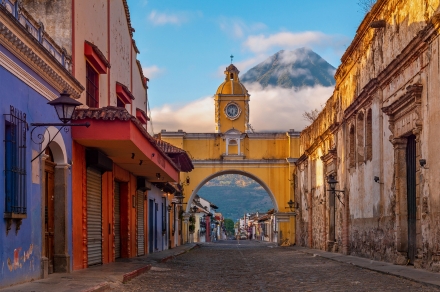
Guatemala City to Antigua is the most-driven tourist route in the country. CA-1 westbound to the Antigua turnoff is paved and patrolled. Traffic is the main issue more so than road quality. Avoid the morning and evening rush if you can.
Antigua to Lake Atitlán stays on paved road for the whole route but involves more elevation change and tighter curves. The descent from Sololá into Panajachel is steep and winding, and it gets socked in with fog early in the morning and late afternoon. Take it slowly.
Guatemala City to Quetzaltenango follows CA-1 for most of the way and is a reasonable full-day drive if you leave outside rush hours.
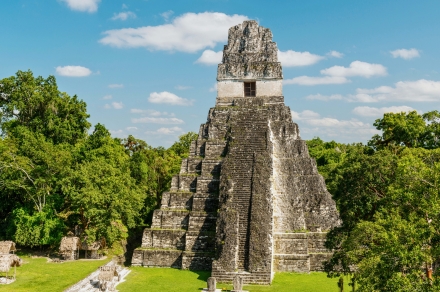
Petén and Tikal are a serious undertaking from Guatemala City, roughly 540 km and 9 to 11 hours depending on conditions. The route carries heavy traffic at times and has rough sections, particularly as you move north. Roads in the northwestern area of Petén near the Mexican border are considered high-risk and should be avoided. A lot of travelers skip the drive entirely and fly into Mundo Maya International Airport in Flores, then rent locally for the short run to Tikal. Enterprise Guatemala's Mundo Maya location is open daily from 7:00 AM to 9:00 PM. If you are set on driving from the capital, plan an overnight in Río Dulce rather than pushing the full distance in one go.
Roadblocks
Roadblocks from protests and strikes happen in Guatemala and can close main highways with little notice. They are almost always peaceful, but they can cause hours of delay. Waze is your best friend for spotting them in real time. PROVIAL also posts road condition updates at provial.gob.gt. If you run into one, sit tight or find a way around. Do not try to push through.
During periods of unrest, check conditions the morning of any long drive and leave yourself enough time in the day. Roadblocks tend to concentrate around Guatemala City and along CA-1 in the western highlands. The Canadian government's travel advisory for Guatemala covers this in some detail and is worth reading before you go.
So, Is It Safe?
For a driver who pays attention and respects the conditions, yes. The routes most visitors use are less intimidating than Guatemala's reputation might suggest. What consistently creates problems is driving at night when you should have stopped, taking secondary roads in the wrong vehicle, or underestimating how much time a route actually takes.
Stick to daylight driving as much as possible. Take an SUV if you are leaving the main highways. Keep your documents accessible, your doors locked, and your phone off while driving. Get offline maps downloaded before you leave the airport.
Enterprise Guatemala can help with questions about vehicle choice or logistics before your trip.
Frequently Asked Questions
What should I do at a police checkpoint if I don't speak Spanish?
Slow down, roll the window down, and hold out your license, passport, and rental agreement. Officers on tourist routes deal with international visitors regularly. "Buenos días" and handing over your documents gets you most of the way there. Do not reach into bags or the glove compartment without making it clear what you are doing. If you are asked something you cannot understand, pointing to your documents and saying "turista" usually works. Most stops take less than a minute.
What should I do if I break down on a rural road with no cell signal?
- Hazard lights on, pull as far off the road as you can.
- Place warning triangles or anything visible behind the vehicle if you have them.
- Stay with the car. Do not walk along the road alone.
- PROVIAL patrols the major highways and will stop to help.
- Once you have signal, call 1520 for PROVIAL or contact Enterprise Guatemala
Save emergency numbers and download offline maps before you leave populated areas.
What should I do if I hit a roadblock?
Pull over safely and do not try to push through. Check Waze or Google Maps for an alternate route and monitor provial.gob.gt for updates. The main thing is making sure a delay does not push you into driving after dark, so build time into your day when unrest is possible.
Is driving in Guatemala safe at night?
On rural roads and between cities, no. The combination of no lighting, pedestrians without reflectors, animals on the road, and unmarked potholes makes night driving genuinely risky. Within Antigua or the well-lit zones of Guatemala City it is a different story. Most experienced drivers here follow one rule: be at your destination before sunset.
What are the emergency numbers for drivers in Guatemala?
Police: 110. Fire and ambulance: 123. Highway assistance: PROVIAL at 1520. Tourist emergencies: ASISTUR at +502 2290-2810.
Do I need a 4WD to drive in Guatemala?
Not for the main tourist routes. The paved highways to Antigua, Lake Atitlán, and Quetzaltenango are all accessible in a standard sedan. Where it starts to matter is on secondary roads, during the rainy season, or heading somewhere like Semuc Champey where the access road is unpaved and rough. If any of that is on your itinerary, a high-clearance SUV is worth the upgrade.