The question deserves a straight answer, not a hedge. Guatemala carries a Level 3 "Reconsider Travel" advisory from the U.S. State Department, citing crime and including "terrorism" designations in high-risk areas. Several areas carry Level 4 “Do Not Travel” designations, including San Marcos Department, Huehuetenango Department, and parts of Guatemala City and Villa Nueva.
At the same time, INGUAT reported over three million international visitors to Guatemala in 2024, a 15 percent increase over 2023, with tourism continuing to grow through the first half of 2025. Hundreds of thousands of those visitors drove rental cars through Antigua, across the highlands, and up to Tikal without incident.
The honest answer is that Guatemala's safety picture is not uniform. It is intensely geographic. Where you go, how you travel, and what decisions you make on the road determine your actual risk level far more than any national headline. For travelers renting a vehicle from Enterprise Guatemala—whose offices run along the main tourist corridor from La Aurora Airport through Antigua, Quetzaltenango, and Flores—understanding that geography is the most important preparation you can do before your trip.
Understanding the Advisory
A Level 3 advisory does not mean Guatemala is uniformly dangerous. It means the U.S. government considers the country to have elevated risk conditions that require travelers to reconsider whether their specific trip is necessary. For context, Mexico, Jamaica, and The Bahamas all carry Level 2 advisories. Level 3 is a meaningful signal, not a blanket prohibition.
What the current advisory specifically identifies:
- Violent crime including robbery, carjacking, and extortion, concentrated heavily in Guatemala City and border departments
- San Marcos and Huehuetenango Departments (Level 4): Both border Mexico and are affected by cartel and gang activity linked to drug trafficking corridors. These are not tourist destinations and do not appear on standard itineraries.
- Zone 18, Guatemala City, and Villa Nueva (Level 4): Gang-controlled territory with no reason for tourists to visit
- Nighttime travel on rural roads: Explicitly flagged as dangerous due to poor lighting and elevated robbery risk
What the advisory does not say is that Antigua, Lake Atitlán, Flores, or Tikal are off limits. U.S. government employees are permitted to travel to all of those destinations, which serves as a practical indicator of assessed risk.
Guatemala City: Transit vs. Stay
Most self-drive travelers pass through Guatemala City rather than staying in it. La Aurora International Airport sits in Zona 13, and the drive north to Antigua or west toward CA-1 does not require time in the city center.
Zones Worth Knowing
If you are transiting through the capital, the relevant zones for travelers are straightforward. Zonas 9, 10, 13, and 14 are the business, diplomatic, and hotel districts. They have visible security, functioning infrastructure, and a lower risk profile than other parts of the city. Zona 10 (Zona Viva) is where most international hotels and upscale restaurants are located and is as safe as the capital gets, though even here the UK Foreign Office notes that no part of Guatemala City is entirely free from crime.
Zona 1, the historic center, has cheaper hotels and direct bus connections but has seen tourists targeted by criminals and is not recommended for first-time visitors. Zonas 3, 6, 18, and 21 are gang-controlled territory with no reason for a tourist to enter under any circumstances.
The Practical Approach
The simplest strategy is to minimize time in the capital entirely. Pick up your rental car from Enterprise Guatemala's La Aurora Airport office, open daily from 5:00 AM to 11:59 PM, and head directly toward your first destination. If you need to overnight in the capital, stay in Zona 10 and use Uber rather than street taxis.
Antigua: The Safest Urban Base in the Country
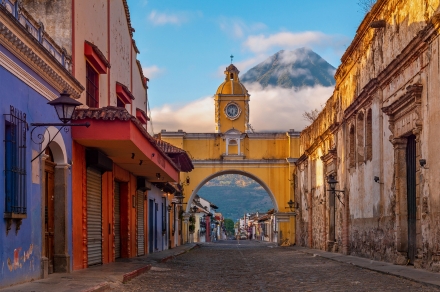
Antigua is the safest city for tourists in Guatemala. Its colonial historic core is patrolled by POLITUR (the tourist police), the streets are walkable during daylight and reasonable after dark within the central grid, and the city has decades of experience as a high-volume international destination.
Petty theft, primarily pickpocketing and bag snatching, is the most common risk in Antigua. Valuables left visible in parked vehicles are a target. Walking alone at night outside the central grid, particularly toward the bus terminal area, carries more risk than staying within the few blocks around Parque Central.
Semana Santa brings a dramatic crowd influx and some increase in opportunistic crime. The specific streets around procession routes can become dense enough that pickpockets operate more easily. Keep bags close, limit what you carry, and be aware of your surroundings in any crowd.
The road between Guatemala City and Antigua on CA-1 is heavily traveled and generally safe during daylight. Avoid alternate routes through less-trafficked zones, particularly after dark. Some years have seen incidents on secondary roads approaching Antigua from directions other than the main San Lucas Sacatepéquez exit.
Lake Atitlán: Generally Safe, with Specific Caveats
The main lakeside towns, including Panajachel, San Juan La Laguna, San Pedro La Laguna, and San Marcos La Laguna, are considered safe for tourists and host a large permanent expat population. Thousands of foreign residents live year-round around the lake, which is among the more reliable indicators of day-to-day safety.
The specific risks at the lake are more localized than in the capital:
Isolated hiking trails between lake towns have seen robberies. Walking the trails between San Pedro and other villages alone is not recommended. Use organized shuttle boats (lanchas) between towns instead of isolated footpaths, particularly after midday.
Boat safety is a practical concern. Lanchas are the standard transit between lake towns, but not all operators use lifejackets or maintain their vessels adequately. Choose boats with visible lifejackets, avoid crossing during high winds when the lake surface becomes rough, and do not take the last boat of the day if it means crossing after dark.
The drive to Panajachel via the Sololá descent is safe during daylight on the main paved route. The Canadian government's travel advisory notes that some secondary routes around the lake, including the Godinez bypass, have seen incidents and recommends sticking to the main Pan-American Highway via Sololá.
Petén and the Road to Tikal
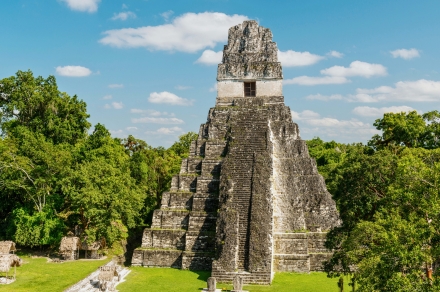
The main road from Flores to Tikal is considered safe during daylight hours. The Tikal site itself has a strong security presence and is one of the better-managed tourist destinations in the country from a safety standpoint. POLITUR operates within the park.
The long Guatemala City-to-Flores drive on CA-9 is a different conversation. The highway is paved and heavily patrolled by police and military checkpoints, but it is also long, passes through remote stretches, and has historically seen incidents involving vehicles stopped on rural sections. The consistent guidance from multiple government advisories is to drive this route during daylight hours only, travel with other vehicles where possible, and not pull over for unmarked vehicles signaling you to stop.
For many travelers, flying from La Aurora to Mundo Maya International Airport in Flores and picking up a vehicle locally is worth considering specifically because it eliminates the Guatemala City-to-Flores highway exposure. Enterprise Guatemala's Mundo Maya Airport office is open daily 7:00 AM to 9:00 PM.
Driving Safety: What the Advisories Actually Say
For self-drive travelers, the safety picture on the roads is more nuanced than a single advisory level captures. The key variables are time of day, route choice, and vehicle behavior.
The Rules That Actually Matter
Nighttime driving is the primary risk factor. Every government advisory from the U.S., UK, Canada, and Australia explicitly warns against intercity driving after dark. This is not bureaucratic caution: rural roads have no lighting, hazards appear without warning, and isolated stretches carry meaningfully higher robbery risk. The no-night-driving rule is non-negotiable.
Main highways are safer than secondary routes. PROVIAL patrols CA-1, CA-2, and CA-9 and sees consistent traffic. The risk of encountering a criminal roadblock or ambush rises significantly on quieter secondary roads, particularly in remote highland and jungle regions. Stick to primary routes, especially for the Guatemala City and Petén corridors.
Do not stop for unmarked vehicles or individuals flagging you down on rural roads. Criminals occasionally pose as police officers or use the appearance of an accident or breakdown to stop vehicles. A legitimate checkpoint will be marked with uniformed officers, orange cones, and a visible police or military presence. A legitimate officer will not require you to leave your vehicle.
Keep car doors locked and windows up in urban areas. Express kidnappings, short-term abductions targeting cash from victims stopped in traffic or at ATMs, are reported in Guatemala City. This risk drops sharply outside the capital but remains a reason for basic urban vigilance.
Roadside Assistance and Emergency Contacts
PROVIAL patrols CA-1 and major national highways and provides free roadside assistance at +502 2419-2121. ASISTUR is available 24 hours at 1500 from any Guatemalan phone, or via WhatsApp at +502 5188-1819. Enterprise Guatemala can be reached at +502 3570-5831 or reservations@enterprise.gt for rental-specific emergencies. Save all three numbers before your first driving day.
Putting the Risk in Perspective
Guatemala's crime statistics are real and should not be minimized. The country recorded 3,847 homicides in 2025, a rate of 22.1 per 100,000 inhabitants according to national police data. That is a high figure by international standards.
What those statistics also reflect is that the overwhelming majority of serious violence in Guatemala is gang-related, territorially concentrated in specific urban zones and border departments, and driven by narcotics trafficking and extortion of local businesses. The places where that violence is most intense are not the places on any tourist itinerary.
The distinction between national crime statistics and tourist-specific risk is not a rationalization. It is a geographic fact that the U.S. State Department's own advisory reflects by allowing U.S. government employees to travel to Antigua, Lake Atitlán, Flores, and Tikal while prohibiting travel to Zone 18 and the border departments.
The traveler who drives from La Aurora Airport to Antigua, spends days in the highlands, descends to Panajachel, and flies to Flores for Tikal is moving entirely within the tourist corridor that Guatemala's security infrastructure prioritizes. That traveler's actual risk profile looks very different from the national homicide rate.
However, Guatemala is not Europe. Complacency has consequences. The travelers who encounter serious problems tend to be those who drive after dark, deviate onto unfamiliar secondary routes, leave valuables visible in vehicles, or ignore the advice of locals about current conditions.
Where to Get Current Information Before You Travel
Conditions in Guatemala can change. The January 2026 gang violence and state of siege were real events that created genuine disruption before security forces regained control. Before any trip, check these sources for current conditions:
- U.S. State Department Guatemala Travel Advisory: The authoritative source for U.S. citizens, updated as conditions change
- CONRED: Active alerts for volcanic activity, landslides, and natural disaster conditions affecting roads
- U.S. Embassy Guatemala City: Security alerts for U.S. citizens, including shelter-in-place notices when conditions deteriorate
- ASISTUR/INGUAT: Guatemala's tourist assistance program, staffed 24 hours in Spanish and English at 1500 or WhatsApp +502 5188-1819
For rental logistics, vehicle selection, and one-way return options between offices, visit enterprise.gt or reach the team at +502 3570-5831 before your trip.
Frequently Asked Questions
Is Guatemala safe for first-time visitors in 2026?
Yes, with the right itinerary and the right habits. The tourist corridor covering Antigua, Lake Atitlán, Quetzaltenango, Flores, and Tikal is genuinely accessible and visited by millions of travelers annually. The risks that make Guatemala's national statistics look alarming are concentrated in specific zones and border departments that standard itineraries do not touch. First-time visitors who stay on main roads, avoid driving after dark, and exercise normal urban awareness are not taking unusual risks.
Which areas of Guatemala should tourists avoid entirely?
The U.S. State Department designates three areas as Level 4 "Do Not Travel":
- San Marcos Department (outside the city of San Marcos)
- Huehuetenango Department (outside the city of Huehuetenango)
- Zone 18 in Guatemala City and the city of Villa Nueva
Beyond those, avoid Zonas 3, 6, and 21 in Guatemala City, isolated hiking trails without guides around Lake Atitlán, and any secondary or rural road after dark regardless of region.
Is it safe to drive a rental car in Guatemala?
On main highways during daylight hours, yes. CA-1 between Guatemala City and Antigua, CA-1 through the western highlands, and the paved Flores-to-Tikal road are all manageable for self-drive travelers. The risk profile rises on secondary roads, remote routes, and any driving after dark. The consistent guidance from the U.S., UK, Canadian, and Australian governments is the same: stay on primary routes, do not drive at night outside urban areas, and keep car doors locked in city traffic.
Is Antigua safe for tourists?
Antigua is the safest city in Guatemala for international visitors. POLITUR (tourist police) patrols the historic core, violent incidents against tourists are rare, and the city functions as a high-volume international destination with a well-developed tourist infrastructure. Petty theft is the primary risk. Exercise normal caution with valuables, avoid walking alone outside the central grid after dark, and keep nothing visible in a parked vehicle.
What happened in Guatemala in early 2026, and does it affect tourist travel?
In January 2026, Guatemala experienced coordinated gang violence tied to prison unrest in and around Guatemala City. The government responded with a temporary state of siege and carried out a series of arrests targeting gang leadership. The disruption was concentrated in the capital and did not directly affect Antigua, Lake Atitlán, or Petén.