Self-driving in Guatemala gives you a level of freedom and flexibility that no shuttle or tour can match. The tradeoff is that driving here requires more active planning than in most destinations, and nowhere is that more true than after dark. Every major government travel authority that covers Guatemala, including the U.S. State Department, the Canadian government, the UK Foreign Office, and the Australian government's Smartraveller advisory, specifically advises against driving outside urban areas at night. The reasons are specific and verifiable, not generalized caution.
This FAQ lays out what the risks actually are, which routes carry the highest exposure, how to plan an itinerary around daylight driving, and what to do when a late arrival makes a night drive unavoidable. Whether you are picking up your vehicle at Enterprise Guatemala's La Aurora Airport office or flying directly into Flores, the guidance here applies before you leave the lot.
Why Is Night Driving Outside Urban Areas Dangerous in Guatemala?
The risks fall into two categories that compound after dark: road hazards and security.
Road hazards are the first problem. Secondary and rural roads throughout Guatemala have little or no lighting. The hazards that are manageable in daylight become genuinely dangerous at night:
- Unmarked speed bumps (tumulos). These exist on virtually every secondary road, at town entrances, near schools, and at points along rural highways. Many are unpainted and unsigned. During daylight you spot them by watching traffic ahead or looking for roadside vendors who cluster where vehicles slow. At night, none of those cues register in time.
- Stalled vehicles on highway shoulders without hazard lights or reflectors.
- Pedestrians and cyclists using the road without reflective gear. Rural roads in Guatemala have no shoulders and no lighting. People walk and cycle along the carriageway after dark routinely.
- Livestock on secondary roads, particularly in highland and jungle regions.
- Unlit construction zones. The UK Foreign Office specifically notes that construction areas in Guatemala are frequently unlit with inadequate or absent signage.
Security is the second problem. The U.S. State Department's current Guatemala travel advisory advises its employees to avoid driving outside Guatemala City at night, citing poor lighting and safety risks. The Australian Smartraveller advisory, updated March 2026, notes that violent crime, including carjacking, increases after dark. The Canadian government travel advisory documents illegal roadblocks as frequent on main roads, including those leading to La Aurora Airport, and advises against driving through any roadblock even if it appears unattended.
Where Is Night Driving Acceptable?
The guidance consistently distinguishes between urban driving in lit zones and intercity highway driving after dark.
Within Guatemala City, night driving is reasonable in well-lit zones. Zona 10, Zona 14, Zona 15, and Zona 16 have adequate street lighting, regular traffic, and the concentration of hotels and restaurants that makes nighttime movement manageable.
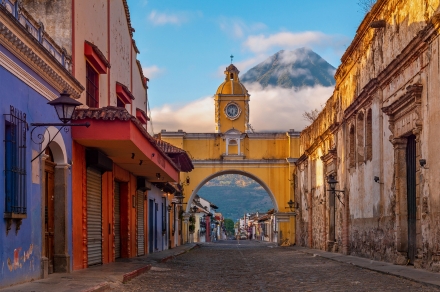
Within Antigua, the historic center is compact and reasonably lit. Short trips between your hotel and nearby restaurants after dark are fine for oriented drivers.
Anywhere beyond these areas, the equation changes. Even the Guatemala City-to-Antigua route on CA-1, while short and well-traveled in daylight, passes through sections that are poorly lit and crosses elevated terrain where fog reduces visibility at night. If the drive involves more than a few kilometers outside a lit urban center, it’s advisable you do it in daylight.
Which Specific Routes Are Most Dangerous at Night?
CA-1 through the western highlands is specifically named in multiple government travel advisories as especially dangerous at night due to heavy truck and trailer traffic, winding mountain sections with minimal guardrails, and fog above 2,000 meters.
The Sololá-to-Panajachel descent to Lake Atitlán is steep, winding, has no guardrails in places, and is poorly lit. It should not be driven after dark.
CA-9, the Atlantic Highway, carries extremely heavy commercial truck traffic between Guatemala City and Puerto Barrios and is cited alongside CA-1 in multiple advisories as especially dangerous due to traffic volume and limited lighting.
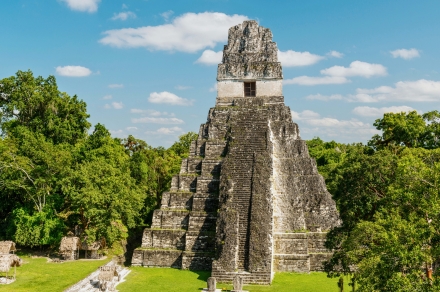
The Flores-to-Tikal road in Petén is unlit, heavily potholed, and runs through jungle with no roadside infrastructure. Tikal National Park closes at 5:00 PM for standard entry, so there is no practical reason to be on this road after dark.
Highland secondary roads in Alta Verapaz, Huehuetenango, and the Cuchumatanes should not be driven after dark. There’s no lighting, variable surface quality, and no roadside assistance.
What Are Tumulos and Why Do They Matter at Night?
Speed bumps in Guatemala are not the gentle, clearly painted bumps familiar from parking lots. They are concrete or asphalt ridges that vary enormously in height and whether they are marked at all. Some are painted yellow with a warning sign. Many have neither paint nor signage. They appear on main roads, at every town entrance, near schools, and at seemingly random points on rural highways where communities have decided traffic needs slowing.
During daylight, experienced drivers anticipate them by watching traffic behavior ahead, noting a change in road surface, or looking for the clusters of roadside vendors who set up where vehicles naturally slow. At night, on an unfamiliar road, none of those cues are available. Hitting a large tumulo at speed causes serious suspension damage and can jolt a vehicle dangerously off its line.
Speed bumps are also inconsistent in size. Some are a few centimeters high and easy to roll over. Others are substantial concrete ridges that will bottom out a sedan moving at anything above walking pace. You cannot know which kind you are dealing with until you are on top of it. The only reliable mitigation on any unfamiliar road at night is driving at a genuinely conservative speed, which on a long highway drive becomes exhausting and dramatically extends journey times.
What Are the Security Risks Specific to Night Driving?
Illegal roadblocks are frequent on Guatemalan highways, including on main roads leading to La Aurora Airport, according to the Canadian government's travel advisory. ASIRT specifically advises never driving through a roadblock even if it appears unattended. On a dark, quiet road at night with minimal traffic and no other drivers passing through regularly, an unexpected obstruction is harder to identify, harder to assess, and harder to safely reverse out of than the same situation encountered in daylight.
Carjacking on isolated highway stretches is documented in multiple government advisories as a risk that increases materially after dark. The Australian Smartraveller advisory specifically names it as a crime that becomes more likely at night, when roads are quieter and fewer witnesses are present.
Opportunistic crime at fuel stops also increases at night. Fuel stations in well-lit urban areas remain reasonably safe, but stopping at a rural station on a dark highway late in the evening creates unnecessary exposure. If a night drive is unavoidable, fuel up completely before leaving your last urban stop, carry enough cash for contingencies, and minimize time stopped in unlit or unfamiliar areas.
How Do I Plan My Itinerary to Avoid Night Driving?
Treat sunset as your hard deadline for being parked at your destination. In Guatemala, sunset falls between approximately 5:30 and 6:15 PM year-round. That window is tighter than most visitors from northern latitudes expect.
Build time buffers into every departure. A 3:00 PM departure from Guatemala City for Panajachel leaves minimal margin if CA-1 traffic is heavy. A 9:00 AM departure gives you comfortable daylight even with a lunch stop en route.
Break up long drives. The Guatemala City-to-Tikal run is best treated as two days with an overnight in Río Dulce, roughly 3.5 to 4 hours from the capital. This removes time pressure entirely.
Account for Guatemala City rush hours. Traffic runs heavy from approximately 5:00 to 8:00 AM and 4:00 to 7:30 PM on weekdays. A departure timed into afternoon congestion can cost 60 to 90 minutes before you reach the city's edge.
Use Enterprise Guatemala's office hours strategically. The La Aurora Airport office is open daily until 11:59 PM and the Mundo Maya Airport office in Flores is open daily until 9:00 PM. Both allow you to pick up on a late arrival and start driving the following morning in daylight.
What Should I Do If a Late Flight Forces a Night Arrival?
If your flight lands at La Aurora Airport after dark, pick up your Enterprise Guatemala rental at the airport office and drive directly to a hotel in Zona 10 or Zona 14 within Guatemala City. Your drive to Antigua, Lake Atitlán, or wherever you are headed starts the following morning.
This adds nothing meaningful to your trip. Antigua is 45 minutes to an hour from the capital in light morning traffic. Leaving at 7:00 AM after a late arrival puts you there before 9:00 AM with a full day ahead.
The same logic applies to a late arrival into Mundo Maya Airport in Flores. Stay overnight in Flores or Santa Elena and drive the 65 km to Tikal in the morning when the park opens at 6:00 AM. You arrive rested, in full daylight, with the entire park day ahead of you.
What If I Cannot Avoid Driving at Night?
If the situation is genuinely unavoidable, these precautions apply.
Stay on named main highways. Navigation apps can route you onto secondary roads that are technically shorter but unlit and poorly maintained. Ignore shortcuts off CA-1, CA-2, CA-9, or CA-13 regardless of what the app suggests.
Drive at a genuinely conservative speed on any road you have not driven before. The tumulo problem alone makes this non-negotiable.
Use low beams rather than high beams in fog. On highland routes above 2,000 meters, fog is common at night. High beams reflect off fog and reduce rather than improve visibility.
Fuel up completely before you leave your last urban stop. Rural fuel stations close in the evening.
Keep doors locked and windows up throughout the drive.
Do not stop for unexpected obstructions on isolated roads. If you cannot confirm a legitimate official checkpoint, do not exit the vehicle. Back up and turn around if you can do so safely.
Tell someone your route and expected arrival time before you depart.
Does Night Driving Affect My Rental Coverage?
Enterprise Guatemala's CDW-TP and TPL coverage does not carry a specific exclusion for night driving. Coverage applies to the full rental period.
What can void coverage is operating the vehicle in ways that breach the rental agreement, such as driving on formally closed roads or driving under the influence. Those exclusions apply regardless of time of day.
The more practical concern is logistics. An incident on an isolated road after dark is harder to manage than one in daylight. Reaching your insurer, filing a police report, and getting roadside assistance all take longer on a dark highway far from a town. Review your coverage terms at enterprise.gt before your trip or speak with the team at the counter when you collect your vehicle.
How Does the Rainy Season Affect Night Driving Risk?
The rainy season, running from May through October, makes every factor above more severe.
Fog on highland roads is more frequent and thicker after dark, particularly on CA-1 above 2,000 meters. Landslides that are rare in the dry season become a genuine possibility after heavy afternoon rain, and a slide that closes CA-1 overnight is not cleared until morning at the earliest. Flooded sections of low-lying roads can develop and deepen after dark with no one monitoring them, and what is a passable road at 6:00 PM can be underwater by 10:00 PM after a storm.
The rainy season also increases the risk of encountering unlit debris on the road. Trees, rocks, and material washed across the carriageway during afternoon storms are not always cleared before nightfall, and on a dark, unlit secondary road they are invisible until your headlights are directly on top of them.
CONRED, Guatemala's national disaster response agency, issues active alerts for road closures and volcanic hazards at conred.gob.gt. Checking this before any long-distance drive in the rainy season is a basic precaution. The overall advice does not change: avoid highway driving after dark. The consequences of ignoring it simply become more severe between May and October.
What If I Need an Early Morning Start for a Sunrise Tour or Volcano Hike?
Some itineraries require pre-dawn departures. The Tikal sunrise tour requires entering the park before 6:00 AM, which means leaving Flores around 4:00 AM. Volcano hikes from Antigua often start before dawn. These plans do not require driving at night the previous evening.
The solution is to position yourself the afternoon before. Drive to Flores, El Remate, or a lodge near Tikal during daylight and spend the night locally. The early morning departure is then a short, known drive from a familiar location rather than a long, unfamiliar highway run in the dark.
Enterprise Guatemala's one-way rental option between any of its offices is useful here. If your itinerary involves positioning yourself in a different city the night before an early departure, you are not locked into returning the vehicle at the same location. One-way surcharges apply and must be booked in advance.
Can I Drive at Night within Guatemala City?
Yes, with specific caveats. Well-lit zones including Zona 10, Zona 14, Zona 15, and Zona 16 are considered reasonable for nighttime driving. These zones have adequate lighting, regular traffic, and active commercial streets.
Travelers should avoid zones 3, 18, 19, and 21 at any hour, with added urgency after dark. The ASIRT road safety review specifically advises motorists to avoid these zones.
The broader principle applies regardless of time: stay in well-trafficked, well-lit areas, keep doors locked and windows up, and do not stop at unofficial or unmarked taxi stands. If you are unfamiliar with the city and need to move around at night, having your hotel arrange transportation or using a verified rideshare app is more practical than navigating unfamiliar streets in a rental car.
For bookings, vehicle questions, or itinerary planning, visit enterprise.gt or reach the team at reservations@enterprise.gt.