Guatemala's road network covers approximately 17,000 km, of which only about 40 percent is paved. That gap tells you nearly everything you need to know before planning a self-drive trip. The main highways between major tourist destinations are manageable. The roads connecting remote markets, jungle ruins, and highland villages range from rough to genuinely impassable, depending on the season and the vehicle under you.
This FAQ breaks down what to expect by region so you can match your itinerary to the right vehicle before you pick up the keys at Enterprise Guatemala. Whether you are landing at La Aurora International Airport in Guatemala City or flying directly into Mundo Maya International Airport in Petén, knowing your route before you drive it is the most practical preparation you can do.
What Are Road Conditions Like in Guatemala Generally?
Guatemala's roads follow a clear hierarchy. Major national highways, designated CA-1, CA-2, CA-9, and CA-13, are paved and reasonably maintained, though all of them have potholes, speed bumps, and sections under repair at any given time. Secondary roads connecting smaller towns to the highway network range from paved-but-rough to unpaved dirt tracks. Remote access roads to natural sites and highland villages can be impassable without high clearance or four-wheel drive, particularly during the rainy season.
Only around 40 percent of Guatemala’s road network is paved, according to World Bank infrastructure data. The remainder varies by season, elevation, and maintenance history.
Universal rules for driving anywhere in Guatemala:
- No driving after dark outside urban areas. Secondary and rural roads have no lighting, and hazards including stalled vehicles, livestock, cyclists, and pedestrians appear without warning.
- Road conditions change significantly during the rainy season. From May through October, conditions on secondary and unpaved roads can deteriorate rapidly. Landslides, floods, and washouts close roads without notice.
- Don't trust GPS alone. Navigation apps work well on major routes but frequently route you onto secondary roads that are technically shorter but far rougher. Download offline maps and cross-reference with local knowledge before deviating from a main highway.
- PROVIAL is your resource on the road. Guatemala's national highway assistance agency patrols major routes and provides free roadside assistance at +502 2419-2121.
What Are Road Conditions Like Around Guatemala City and Antigua?
The Guatemala City-to-Antigua corridor is one of the best-maintained stretches in the country. CA-1 west from the capital to the Antigua turnoff is paved, two to four lanes wide, and heavily traveled. The descent into Antigua via the San Lucas Sacatepéquez exit is steeper and narrower but fully paved throughout.
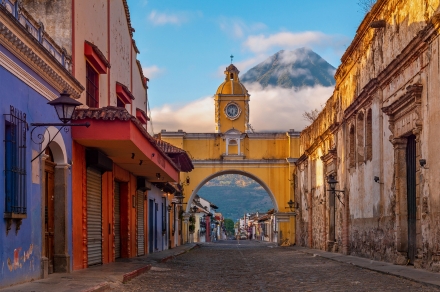
Inside Antigua, the streets are colonial-era cobblestone, navigable in any vehicle but narrow enough that two cars cannot always pass simultaneously. A compact or midsize sedan is easier to maneuver and park than a full-size SUV if Antigua is your primary destination.
Guatemala City traffic is a separate challenge. Rush hours run approximately 5:00 to 8:00 AM and 4:00 to 7:30 PM on weekdays, and congestion along Calzada Roosevelt and the Periférico can add 30 to 60 minutes to any cross-city drive. Travelers picking up a rental car at Enterprise Guatemala's La Aurora Airport office on the third floor of the airport parking building should plan departures outside peak hours when possible.
Vehicle recommendation: Any vehicle handles CA-1 and the Antigua approach. A compact or midsize sedan is the most practical choice inside Antigua's cobblestone streets.
What Are Road Conditions Like in the Western Highlands?
The western highlands cover Chimaltenango, Sololá, Quetzaltenango, and Huehuetenango and present the country's most varied road conditions in the shortest distances.
CA-1 Through the Highlands
CA-1 is paved throughout this region but climbs to elevations exceeding 2,500 meters in places. Expect winding mountain sections, narrow passages, minimal guardrails, and fog that rolls in without warning, particularly in the early morning and late afternoon. The road to Quetzaltenango (Xela), Guatemala's second-largest city, runs approximately 200 km from Guatemala City and takes 4 to 5 hours. It is suitable for any vehicle, though the highland curves demand patience rather than speed.
Enterprise Guatemala operates an office in Quetzaltenango at 6a Calle 5-23, open Monday through Sunday, making it a practical pickup or drop-off point for travelers exploring this region.
Beyond the Main Highway
Routes deeper into the Cuchumatanes mountain range toward destinations like Laguna Brava are a different situation entirely. These are not simply rough roads; they are technical conditions requiring 4WD and local guidance. Do not attempt them in a standard sedan or without asking locally about the current state before you set out.
Vehicle recommendation: Any vehicle handles CA-1. An SUV is recommended for secondary highland roads. 4WD is required for Cuchumatanes and remote access routes.
What Are Road Conditions Like Around Lake Atitlán?
The main approach to Lake Atitlán from Guatemala City follows CA-1 through Chimaltenango to the Sololá turnoff, then descends 8 km on a steep, winding paved road into Panajachel on the north shore. This descent involves hairpin switchbacks and limited visibility on curves. It is manageable in a sedan in dry conditions. In fog or rain, slow down considerably and use low gear on the way down.
There is no road circling Lake Atitlán. The steep volcanic terrain makes a complete circuit impossible, and most lakeside villages are accessible only by lancha (small boat) from Panajachel's main dock. The eastern shore towns of San Antonio Palopó and Santa Catarina Palopó can be reached by semi-paved road from the highland highway, but an SUV provides more confidence on these routes during the rainy season.
Parking in Panajachel is limited. Several paid lots operate near the central market and the main dock, and most hotels offer or can arrange private parking. If you are visiting the lake on a day trip with a rental car, arrive early, as spaces fill by mid-morning on weekends.
Vehicle recommendation: Sedans handle the main Panajachel route in dry conditions. An SUV is recommended for the rainy season descent and for eastern shore roads to San Antonio Palopó and Santa Catarina Palopó.
What Are Road Conditions Like in Petén?
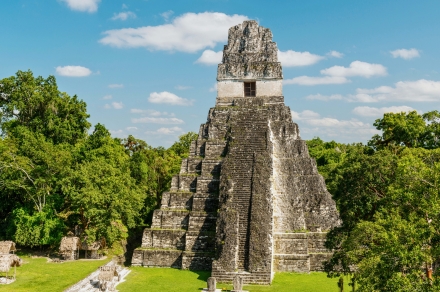
The main paved highway runs from the CA-9/CA-13 corridor through to Santa Elena and Flores, and the road from Flores to Tikal National Park is paved but heavily potholed and studded with speed bumps throughout. Plan for 1.5 to 2 hours for the 65 km Flores-to-Tikal stretch regardless of the modest distance.
Beyond those two routes, road conditions in Petén deteriorate quickly. Secondary roads to smaller sites and communities are predominantly unpaved dirt tracks. During the rainy season they can become muddy, flooded, or impassable. The U.S. Embassy in Guatemala has documented recurring sinkhole repairs, bridge maintenance, and sections in poor condition along the Petén highway corridor. For sites beyond Tikal, including Yaxhá (approximately 65 km east of Flores on a dirt road) and Uaxactún (23 km north of Tikal inside the park), an SUV is strongly recommended in dry season and effectively required in wet season.
Enterprise Guatemala's Mundo Maya Airport office in Flores stocks SUVs and pickups suited to Petén conditions and is open daily 7:00 AM to 9:00 PM.
Vehicle recommendation: An SUV is recommended for Tikal in the dry season. An SUV or pickup is strongly recommended in the rainy season. 4WD is effectively required for secondary sites, including Yaxhá and Uaxactún.
What Are Road Conditions Like on the Pacific Coast?
CA-2, the Pacific Highway, runs along Guatemala's southern coast and is generally paved and less mountainous than the highland routes. It connects the Mexican border at Tecún Umán through Retalhuleu and Escuintla toward El Salvador and is one of the flatter, more predictable drives in the country.
The Autopista Palín-Escuintla connects Guatemala City to CA-2 and is one of the flatter, faster approaches to the Pacific coast.
Secondary roads branching toward beach towns vary. The road to Monterrico is paved for most of its length but rougher in the final stretch approaching the coast. Sugar cane harvest season, roughly October through March, brings heavy agricultural trucks that slow highway traffic and leave road debris behind. Coastal roads can also flood quickly during heavy afternoon rains.
Vehicle recommendation: Sedans handle CA-2 and the Autopista Palín-Escuintla without issue. An SUV provides more confidence on coastal access roads and during the afternoon rains of the rainy season.
What Are Road Conditions Like in Alta Verapaz?
Alta Verapaz sits in its own category for road difficulty. The densely forested highland region north of Guatemala City, which is home to the city of Cobán and the natural pools of Semuc Champey, is one of Guatemala's most rewarding destinations and one of its most demanding drives.
Guatemala City to Cobán
The main road from Guatemala City to Cobán is paved and takes approximately 4 to 5 hours. It is manageable in any vehicle, though the route involves steady climbing and winding sections through cloud forest. Allow extra time and fuel up before leaving the capital.
Cobán to Semuc Champey
This is where conditions change sharply. The approach to Semuc Champey covers a final stretch of rough unpaved mountain road through the town of Lanquín. High clearance is necessary, and 4WD is strongly recommended. In the rainy season the road can become impassable for standard vehicles. The practical solution during wet months: park in Lanquín and use one of the local 4WD trucks that run regular shuttle service to the Semuc Champey entrance.
Landslide Risk
Alta Verapaz is one of the departments most consistently affected by rainy season landslides. CONRED reported it as one of the most affected departments during the 2022 rainy season, with multiple road closures, significant infrastructure damage, and fatalities. Check CONRED bulletins at conred.gob.gt before driving in this region between May and November.
Vehicle recommendation: An SUV is required for the Lanquín approach. 4WD is strongly recommended May through November.
What Are Road Conditions Like on the Atlantic Route toward Río Dulce?
CA-9, the Carretera al Atlántico, runs northeast from Guatemala City through the Motagua Valley to Puerto Barrios on the Caribbean coast and serves as the main overland route to Petén via Río Dulce. It is paved and one of Guatemala's busiest freight corridors, carrying heavy commercial traffic heading to and from the port of Puerto Barrios. Passing safely on this highway requires patience, particularly in the hillier section between Guatemala City and El Rancho.
The Río Dulce bridge crossing at approximately km 275 is a recurring maintenance point. The U.S. Embassy has previously documented bridge paving work and one-lane restrictions here. Check conditions before departure if timing is critical. From Río Dulce north, the road flattens and commercial traffic eases as you enter Petén. The town of Río Dulce itself, at the edge of Lake Izabal, is a natural and practical overnight stop if you are breaking the Guatemala City-to-Petén drive into two days.
Vehicle recommendation: Any vehicle handles CA-9 comfortably. The route is paved throughout. Patience with heavy freight traffic matters more than vehicle type on this corridor.
How Does the Rainy Season Affect Roads Across the Country?
Guatemala's rainy season runs from May through October, with September and October typically the most intense months. The impact varies by region and road type, but the consistent message from CONRED, the Canadian government travel advisory, and the U.S. Embassy is the same: conditions can change rapidly and without warning.
Main highways generally stay open through the rainy season, though flooding can temporarily close low-lying sections and landslides can cut CA-1 in the highlands. PROVIAL monitors and clears these routes as quickly as possible. The World Bank has noted that between May and November, heavy rains effectively restrict most unpaved roads in Guatemala to four-wheel-drive vehicles.
Before driving anywhere in rainy season:
- Check CONRED at conred.gob.gt for active landslide and flood alerts
- Check PROVIAL at provial.gob.gt for current highway conditions
- Ask your accommodation the morning of departure whether your intended route is open, as local knowledge is often more current than any official source
- Contact ASISTUR for real-time travel guidance: 1500 from any Guatemalan phone, +502 2290-2810 from abroad, or WhatsApp at +502 5188-1819, available 24 hours a day in Spanish and English
Are Police Checkpoints Common, and What Should I Expect?
Yes. Police and military checkpoints are a routine part of driving on Guatemala's main highways, particularly on CA-1, CA-9, and routes into Petén. They are standard procedure, not cause for concern, provided your documents are in order.
What to have ready:
- Driver's license → valid, physical, current
- Passport
- Rental agreement → your Enterprise Guatemala contract serves as the vehicle document
Officers are generally professional and familiar with rental vehicles. Stay in the car unless asked to step out. Do not offer payment under any circumstances.
Roadblocks are a separate issue. Construction delays and protest-related road closures are common, particularly in the northern and western departments. The Canadian government travel advisory specifically notes that roadblocks are frequent in these regions and can cause substantial delays with no advance warning. Build flexibility into any overland itinerary. A route that takes 4 hours on a clear day can stretch to 6 or more when a blockage is in place.
What Should I Do If My Rental Car Breaks Down or I Have an Accident?
If you experience a breakdown on a main highway, pull as far off the road as possible and activate your hazard lights. PROVIAL patrols major routes and can assist with basic roadside needs. Their number is +502 2419-2121 and their services are free.
For an accident in your Enterprise Guatemala rental, stay at the scene, contact your insurer (available 24/7), contact local emergency services, and notify Enterprise Guatemala at +502 3570-5831 or reservations@enterprise.gt. Under Guatemalan law, vehicles involved in an accident generally remain in place until authorities or an insurance adjuster arrives. Do not move the vehicle unless it is blocking traffic dangerously.
For tourist-specific emergency assistance, ASISTUR is available 24 hours a day at 1500 from any Guatemalan phone, +502 2290-2810 from abroad, or via WhatsApp at +502 5188-1819, in both Spanish and English.
What Vehicle Do I Need for My Region?
The short answer by destination:
Guatemala City and Antigua: Any vehicle. A compact sedan is easiest in Antigua.
Lake Atitlán: Sedans handle the main route in the dry season. An SUV is recommended in the rainy season and for eastern shore roads.
Quetzaltenango and western highlands main roads: Any vehicle via CA-1. An SUV is recommended for secondary roads.
Remote highlands (Cuchumatanes, Laguna Brava): 4WD is required. Do not attempt without local guidance.
Petén and Tikal, dry season: An SUV is recommended. The Tikal road is paved but rough.
Petén and Tikal, rainy season: An SUV or pickup is strongly recommended. Secondary sites require 4WD capability.
Alta Verapaz and Semuc Champey: An SUV is required for the Lanquín approach. 4WD is strongly recommended in the rainy season.
Pacific Coast via CA-2: Sedans handle the highway. An SUV gives more confidence on coastal access roads.
Atlantic route via CA-9 to Río Dulce: Any vehicle. Heavy truck traffic requires patient driving.
Enterprise Guatemala's fleet includes sedans, SUVs, pickups, and vans, with no vehicle older than two years. To discuss the right vehicle for your itinerary, visit enterprise.gt, call +502 3570-5831, or reach the team via WhatsApp at the same number.