The rainy season changes Guatemala's roads. Mornings are clear, afternoons bring heavy downpours, and the window for safe travel on secondary roads narrows considerably. Roads flood, landslides close highland routes without warning, and conditions that are manageable in June can become genuinely dangerous by September.
Driving in Guatemala's rainy season is entirely doable with the right vehicle and the right information. This FAQ covers what to expect, which routes are most affected, and how to prepare before picking up your keys at Enterprise Guatemala.
When Is the Rainy Season in Guatemala?
Guatemala's rainy season, known locally as invierno, generally runs from May through October, according to the U.S. Embassy in Guatemala's 2025 weather advisory. In Petén, rains can extend into November or even December, as the northern jungle department sits on a longer precipitation cycle than the rest of the country.
The pattern across most of Guatemala is consistent: mornings tend to be clear, with clouds building over the volcanoes by midday and heavy afternoon showers arriving between roughly 2:00 and 6:00 PM. This rhythm makes morning driving significantly more predictable than afternoon travel, particularly on secondary and mountain roads.
September and October are the most intense months. The ground becomes saturated over time, and the risk of flooding and landslides increases substantially in the second half of the season. Travelers with flexibility in their itineraries are better positioned during June and early July, when rain patterns are more manageable and the roads have not yet taken the accumulated punishment of a full season's storms.
How Does Rain Affect Road Conditions Across the Country?
The impact varies significantly by road type and region.
Main highways, including CA-1, CA-2, CA-9, and CA-13, generally stay open through the rainy season. Flooding can temporarily close low-lying sections and landslides can cut highland routes, but PROVIAL, Guatemala's national highway assistance agency, patrols and clears these corridors as quickly as resources allow.
Secondary roads are more vulnerable. The Canadian government's travel advisory notes that during the rainy season, roads can become impassable due to mudslides and landslides, and that bridges and infrastructure may be damaged. A road that is open at 8:00 AM after a dry night can be blocked or washed out by 4:00 PM following a heavy afternoon storm.
Unpaved and remote access roads are the most severely affected. As the World Bank documented in its July 2025 Guatemala road infrastructure assessment, only about 40 percent of the country's road network is paved. Heavy rains between May and November can restrict most unpaved roads to four-wheel-drive vehicles, sometimes for days at a time until they drain or are cleared.
Which Regions Are Most Affected by Rainy Season Conditions?
Not all regions experience the same level of disruption.
Alta Verapaz is consistently the hardest hit department. CONRED reported it as the hardest-hit region during the 2022 rainy season, with multiple road closures, bridge failures, and landslide fatalities. The roads to Semuc Champey and other remote sites in this region require particular caution from May onward.
The western highlands (Chimaltenango, Sololá, Quetzaltenango, Huehuetenango) sit at high elevations where mountain roads are steep, narrow, and prone to rockslides. Fog compounds the risk on passes above 2,000 meters, particularly on CA-1 and the descent into Panajachel.
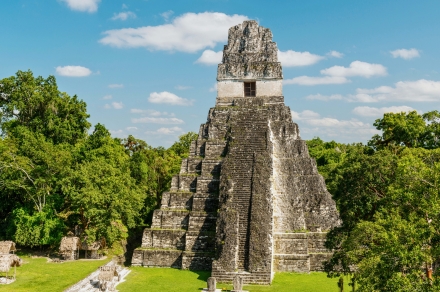
Petén receives heavy rainfall through a longer season and its secondary roads become muddy and unreliable well into November. The main Flores-to-Tikal road stays passable, but any route beyond the paved corridor demands high clearance and careful planning.
The Pacific slope floods quickly during intense afternoon rain, and sugarcane harvest trucks on CA-2 between October and March create additional road debris and traffic slowdowns.
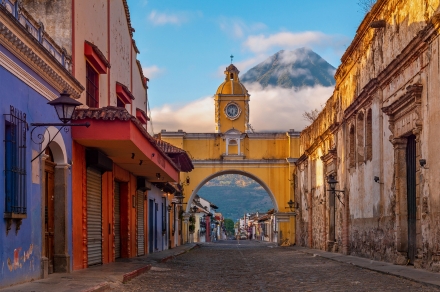
The Guatemala City-to-Antigua corridor on CA-1 is one of the more resilient routes in the country during the rainy season, though landslides on the highland approach have caused closures in past years and should not be assumed safe without checking conditions first.
How Do Volcanic Hazards Interact with the Rainy Season?
This is a specific risk that many visitors underestimate. Guatemala has three active volcanoes: Fuego, Pacaya, and Santiaguito. Fuego, located approximately 40 km from Guatemala City and 16 km from Antigua, on the borders of Sacatepéquez, Escuintla, and Chimaltenango, is one of the most active in Central America. It erupted twice in 2025, in March and again in June.
When Fuego erupts, volcanic material accumulates on its flanks and in surrounding ravines. During the rainy season, that material mixes with rainfall to generate lahars (volcanic mudflows), which can travel rapidly down river channels and damage roads without warning. INSIVUMEH, Guatemala's national volcanology institute, specifically warns that accumulated volcanic sediment from previous eruptions can be mobilized by heavy rains even when no new eruption is occurring.
Both the March and June 2025 Fuego eruptions resulted in the closure of RN-14, the route connecting several communities to Antigua. Ashfall from significant eruptions can also coat road surfaces and reduce visibility across a wide area.
Before driving in the Sacatepéquez, Escuintla, or Chimaltenango departments during the rainy season, check CONRED alerts and INSIVUMEH bulletins. Both agencies publish regular updates in Spanish, and both are the authoritative sources for volcanic activity and disaster alerts in Guatemala.
What Vehicle Do I Need for Rainy Season Driving?
The right vehicle depends on where you are going and when.
For the main tourist corridors, including Guatemala City to Antigua, the CA-1 route to Lake Atitlán, and the paved Flores-to-Tikal road, a sedan handles rainy season conditions without difficulty. These routes are paved, well-traveled, and PROVIAL-patrolled.
For any route involving secondary roads, highland villages, or remote destinations like Semuc Champey, Yaxhá, or the back roads around Huehuetenango, an SUV with genuine ground clearance is strongly recommended during the rainy season. On the most remote routes in Alta Verapaz and the Cuchumatanes, 4WD capability moves from recommended to effectively required from June onward.
A pickup truck is worth considering for travelers who plan to spend significant time off the main highways. The added clearance and traction make a real difference on muddy rural roads, and pickups are a common and practical vehicle throughout Guatemala's highland and jungle regions.
Enterprise Guatemala's fleet includes sedans, SUVs, and pickups, with no vehicle older than two years. When booking, describe your intended route and the team at enterprise.gt can advise on the most appropriate choice. The La Aurora Airport office is open daily 5:00 AM to 11:59 PM, and the Mundo Maya Airport office in Flores is open daily 7:00 AM to 9:00 PM.
When Should I Drive, and When Should I Wait?
Structure your driving days around the rainy season's natural rhythm.
Depart early. Most destinations in Guatemala can be reached in the morning before afternoon storms develop. On mountain routes, an early start also means better visibility before clouds settle on highland passes.
Avoid driving during heavy rain. The U.S. Embassy advises against traveling while heavy rains are actively occurring, noting that roads can quickly become extremely unsafe. Navigation apps can also route you onto secondary roads affected by flooding or landslides, so cross-reference any GPS detour with local knowledge before leaving a main highway.
Do not drive at night regardless of weather. Rural and secondary roads throughout Guatemala have little or no lighting, and hazards appear without warning. This is a year-round rule that becomes even more important when road surfaces are wet and visibility is reduced.
Build meaningful flexibility into your itinerary. A route that takes 2.5 hours in dry conditions may take considerably longer in September if a landslide has closed a section of CA-1 and traffic is being rerouted. Allow time for delays you cannot predict, and avoid booking onward flights or connections with tight transfer windows during the rainy season months.
How Do I Check Road Conditions Before Departing?
Several sources are available and should be used together rather than in isolation.
CONRED (Coordinadora Nacional para la Reducción de Desastres) publishes active alerts for landslides, volcanic activity, flooding, and road closures at conred.gob.gt. Bulletins are in Spanish and are updated frequently during active events.
PROVIAL (Dirección General de Protección y Seguridad Vial) monitors major highways and provides free roadside assistance. They can be reached at +502 2419-2121. Their website at provial.gob.gt publishes highway condition updates.
ASISTUR (Guatemala's tourist assistance program) operates a 24-hour call center staffed in Spanish and English. Call 1500 from any Guatemalan phone, +502 2290-2810 from abroad, or reach them via WhatsApp at +502 5188-1819. They can provide current travel guidance and connect you with appropriate assistance.
Local accommodation is often the most immediately practical source. Ask at your hotel or guesthouse each morning whether your intended route is currently open. Owners and staff in highland towns often have up-to-the-minute knowledge of local closures before official sources are updated online.
What Should I Do If I Encounter a Flooded Road?
Do not attempt to drive through standing water of unknown depth. This applies regardless of vehicle size or whether other drivers appear to have crossed before you.
Flood water can hide washed-out road surfaces, sinkholes, and submerged obstacles. Water moving across a road is more dangerous than still water, and even a shallow flow can shift a vehicle off course or pull it into a ditch. If you cannot clearly see the road surface through the water and confirm it is intact, stop and wait for conditions to improve, or turn around and find an alternate route.
If you are waiting out a flooded section, move the vehicle fully off the road, activate your hazard lights, and stay with the vehicle. Do not leave it unattended on a narrow road where other drivers may not see it in time.
If you are in an Enterprise Guatemala rental and road conditions have left you stranded or uncertain, contact the team at +502 3570-5831 or reservations@enterprise.gt. For emergencies, ASISTUR is available 24/7 at 1500 or via WhatsApp at +502 5188-1819.
What Should I Carry in the Vehicle During the Rainy Season?
A few additions to the standard rental checklist make a meaningful difference on rainy season roads.
Spare tire → Confirm it is in serviceable condition before leaving any Enterprise Guatemala office. Wet and rough roads increase the likelihood of a puncture, and a flat tire on a remote highland road in the rain is a situation you want to be prepared for.
Cash in quetzales and small USD bills → If you are rerouted due to a road closure, you may encounter toll booths, fuel stations, or situations where card readers are not available. Enterprise Guatemala rental vehicles do not include electronic toll payment systems, so cash is always necessary for CA-9 toll plazas regardless of season.
Offline maps → Download before leaving urban areas. Mobile signal is unreliable in highland and jungle regions and drops out entirely in parts of Petén and Alta Verapaz. An offline map means you can continue navigating if your data connection disappears mid-route.
Basic emergency kit → A flashlight, water, and a face covering or bandana for potential ashfall rounds out practical preparation for a rainy season drive in volcanic zones.
How Does the Rainy Season Affect Enterprise Guatemala Pickup and Drop-Off?
Enterprise Guatemala's airport offices operate on fixed hours regardless of season. The La Aurora International Airport office is open daily 5:00 AM to 11:59 PM, and the Mundo Maya Airport office in Flores is open daily 7:00 AM to 9:00 PM. City offices in Antigua, Zona 10, Cofiño, Hincapié, Hotel Barceló, and Quetzaltenango maintain their standard hours throughout the rainy season as well.
For travelers planning itineraries that may need to flex due to weather, Enterprise Guatemala allows one-way returns between any of its offices with advance booking. If road conditions or volcanic activity alter your planned route, you are not locked into returning the vehicle at the same location. One-way surcharges apply and must be confirmed before your trip.
Contact reservations@enterprise.gt or call +502 3570-5831 to discuss vehicle selection, routing, and one-way options before you depart.
Is It Worth Renting a Car During the Rainy Season?
Yes, for most itineraries and most travelers. The morning weather window is predictable enough that a driver who plans around it can cover significant ground daily. The main tourist routes between Guatemala City, Antigua, Lake Atitlán, Quetzaltenango, and Flores are all manageable in the rainy season with the right vehicle and reasonable departure times.
The tradeoff → Some secondary routes become unreliable, afternoon schedules need more flexibility, and September and October demand more caution than June and July. But a rental car still gives you considerably more control over your timing and access than shared shuttles, which also cancel or delay in bad weather and leave you entirely dependent on someone else's schedule.
The practical argument for renting is especially strong → Groups of two or more, families with luggage, and travelers moving between multiple destinations all benefit from the flexibility. A shuttle from Antigua to Panajachel runs when it runs. Your rental car runs when you are ready.
To plan your rainy season rental, visit enterprise.gt or reach the team directly at +502 3570-5831 or via WhatsApp at the same number.
What Emergency Contacts Should I Save Before a Rainy Season Drive?
Save these before you leave your accommodation each morning.
ASISTUR (tourist assistance, 24/7, Spanish and English): 1500 from a Guatemalan phone, +502 2290-2810 from abroad, WhatsApp +502 5188-1819.
PROVIAL (highway assistance on major roads): +502 2419-2121.
CONRED (disaster alerts, volcanic activity, road closures): conred.gob.gt.
Enterprise Guatemala (rental assistance and emergencies): +502 3570-5831 or reservations@enterprise.gt.
Bomberos Municipales Departamentales (fire and emergency outside Guatemala City): 1554.